
BUSINESS
Treasury’s $6 Billion Buyback Leaves the 10-Year Higher
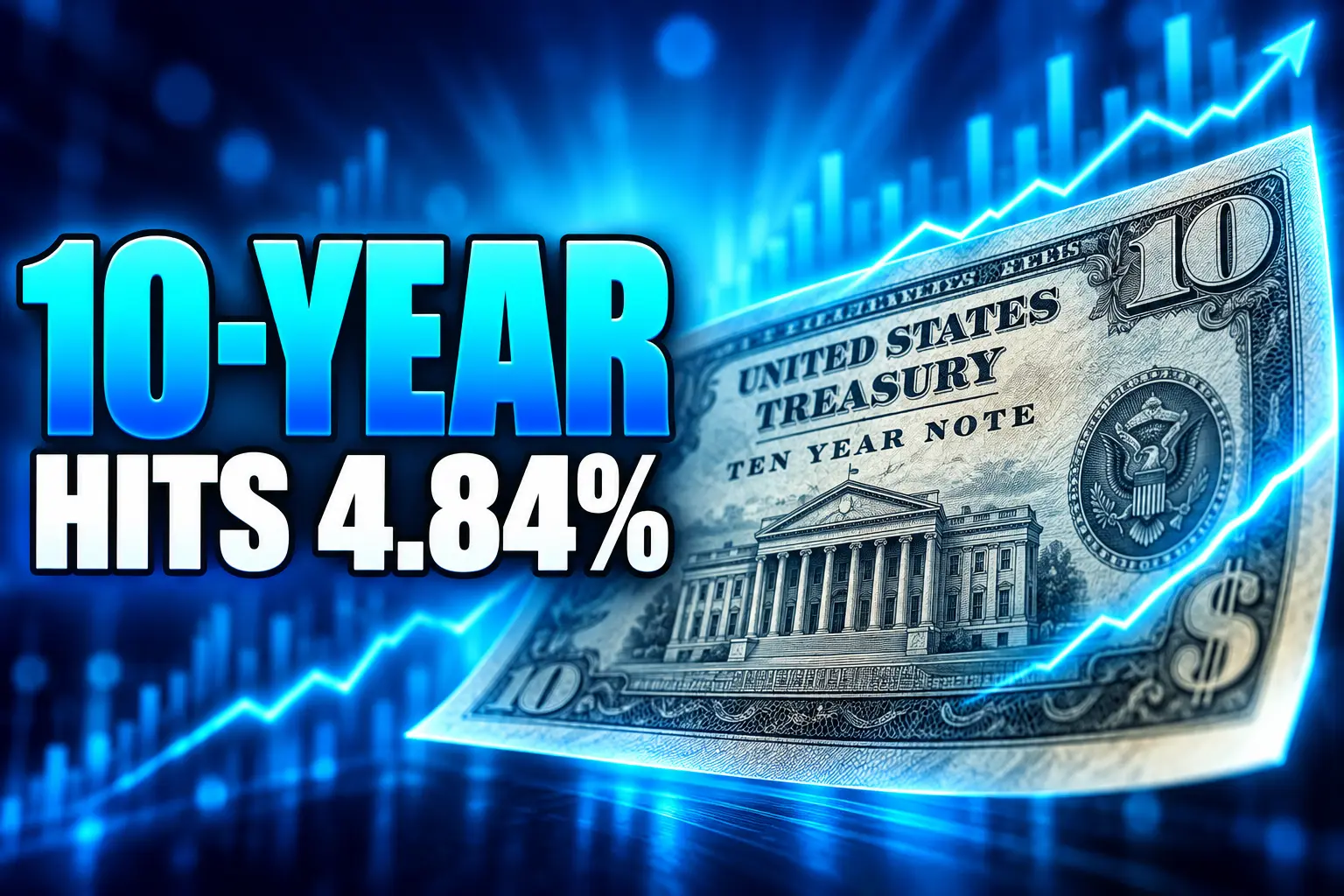
Treasury tripled a long-end buyback to $6 billion, above Scott Bessent’s $4 billion floor, and the 10-year still rose to 4.836% as oil topped $100.

The 10-year Treasury yield rose 0.03 percentage point to 4.836% on Sept. 9 after investors judged a $6 billion long-end buyback too small. It was the highest yield since November 2023, and major U.S. stock indexes fell for a third straight session as Brent crude closed at $101.21.
The purchase cap was triple the old $2 billion limit and sat above the $4 billion floor Treasury Secretary Scott Bessent had called a minimum in August. The bond market sold anyway, then only eased after a $39 billion 10-year auction cleared better than feared.
Bessent Sold a $4 Billion Floor in August
On Aug. 19 the Treasury said it would at least double longer-dated buyback sizes, lifting the 10-year to 20-year and 20-year to 30-year caps from $2 billion to at least $4 billion per operation. The change took effect Sept. 9 and runs through the Nov. 4 refunding. The department said dealers had been sending in large books of high-quality offers in those sectors and that it wanted more liquidity support there.
Bessent did not leave the number alone. The next day he said the new operations could run above that floor, and he framed the move as a signal that market yields were off the fundamentals. Leah Traub, a fixed-income portfolio manager at Lord Abbett, said he had “set expectations really high” by stressing that doubling to $4 billion was the minimum he could do.
I would note that it could be more than the $4 billion per issue.
Scott Bessent, U.S. Treasury secretary, August 2026
Krishna Guha, head of economics at Evercore ISI, had already called Bessent’s approach a very activist model for a Treasury secretary. Nellie Liang, speaking after the August surprise, said the program looked aimed at yields, not only at plumbing. Bessent has said he cannot change the equilibrium price and that his job is to slow disorderly moves. The Sept. 9 tape treated $6 billion as the new ceiling he had invited, not as a gift.
THE BUYBACK CALENDAR FROM AUGUST
- August 19, 2026: Treasury lifts long-end liquidity-support caps from $2 billion to at least $4 billion, effective Sept. 9 through Nov. 4.
- August 20, 2026: Bessent says operations could exceed $4 billion per issue and calls part of the change a signal.
- September 9, 2026: Treasury sets the next day’s 10-year to 20-year operation at up to $6 billion; the 10-year yield peaks above 4.85%.
- September 9, 2026: A $39 billion 10-year note auction stops at 4.834% with a 2.71 bid-to-cover, and yields give back some of the morning spike.
- September 10, 2026: The long-end operation is scheduled for 1:40 p.m. to 2:00 p.m. Eastern, settling Sept. 11.
Each step was larger than the last on paper. Each also taught dealers to fade the first print and wait for the next one.
A $6 Billion Cap Still Looked Light
Thursday’s operation targets off-the-run nominal coupons in the 10-year to 20-year sector. Treasury’s published buyback operations data lists a 20-minute window, 1:40 p.m. to 2:00 p.m. Eastern, with settlement the next day. That $6 billion cap is 50% above the $4 billion floor and three times the $2 billion size used in the last comparable 10-year to 20-year operation, on Aug. 11.
Peter Boockvar of The Boock Report said desks had sketched as much as $7 billion to $8 billion. Some books had gone further. Against that tape, $6 billion read as the number Treasury could defend, not the number that would clear the line.
The line has been long all summer. Dealers keep offering far more long bonds than the window can take, and Treasury still refuses rich prices. On March 19 it accepted only $205 million from a swollen book because the offers were too expensive.
RECENT TREASURY BUYBACK OPERATIONS
| Operation | Sector | Cap | Offered | Bought | Offered / cap |
|---|---|---|---|---|---|
| July 16, 2026 | 20Y to 30Y | $2.0B | $30.5B | $2.0B | 15.3x |
| July 23, 2026 | 10Y to 20Y | $2.0B | $16.3B | $2.0B | 8.2x |
| Aug. 11, 2026 | 10Y to 20Y | $2.0B | $7.4B | $2.0B | 3.7x |
| Aug. 18, 2026 | 20Y to 30Y | $2.0B | $19.9B | $2.0B | 9.9x |
| Sept. 9, 2026 | 1Mo to 2Y | $12.5B | $28.0B | $12.5B | 2.2x |
The short-end cash-management window on Sept. 9 took $12.5 billion, more than twice Thursday’s long-end cap, and still saw $28.0 billion offered. The long end is where sponsorship is hottest and where a $6 billion bid looks small next to a $30.5 billion book.
The $39 Billion Auction Cleared Through the Market
The buyback headline hit in the morning. The 10-year yield peaked above 4.85%, then the regular 10-year auction at 1 p.m. Eastern did the job the buyback announcement did not. Treasury sold $39 billion of notes at a high yield of 4.834%, 1.5 basis points through when-issued. That was the highest 10-year auction yield since Aug. 8, 2007, when the stop was 4.855%.
SEPT. 9 MARKET SNAPSHOT
- Auction stop: 4.834% on $39 billion of 10-year notes, with a 2.71 bid-to-cover against 2.53 at the Aug. 12 sale and a 2.50 twelve-month average.
- Who bought: Indirect bidders took 79.2%, directs 16.5%, and primary dealers only 4.3%.
- Stocks: The Dow Jones Industrial Average fell 405.41 points, or 0.77%, to 52,380.66, a third straight drop for the major indexes.
- The rest of the tape: The S&P 500 lost 37.16 points, or 0.48%, to 7,636.36, and the Nasdaq Composite lost 168.07 points, or 0.64%, to 26,253.34.
Demand showed up. It showed up at a price. Indirects, the group that includes foreign official accounts, carried the sale, so dealers were not stuck with the leftovers. After the stop, the on-the-run 10-year settled near 4.836%, still up on the day and still above levels seen since the 2023 backup. The 10-year yield peaked at 4.98% on Oct. 19, 2023, so this print is the highest since that episode faded, not a break of the cycle high.
The Russell 2000 dropped 38.97 points, or 1.3%, to 2,921.23. Industrials in the S&P 500 fell 1.51%, and consumer discretionary fell 1.39%. Energy rose 1.09%, the only primary sector in the green.
Brent at $101 Overpowered the Bid
A $6 billion coupon bid cannot add barrels. Front-month Brent settled at $101.21, up 3.4%, the first close above $100 since July. West Texas Intermediate rose 3.2% to $96.05. Both were the highest settlements since May 22.
U.S. Central Command said its forces destroyed five Iranian crude oil carriers on Sept. 8 after the Islamic Revolutionary Guard Corps fired ballistic missiles at a U.S. Navy warship twice in two days. The warship was not hit, and no American personnel were harmed, the command said. Crews were told to abandon ship before the strikes.
THE FIVE TANKERS HIT ON SEPT. 8
- M/T Kaviz: Destroyed in the Gulf of Oman.
- M/T Charminar: Destroyed in the Gulf of Oman.
- M/T Horizon 1: Destroyed in the Gulf of Oman.
- M/T Riesco: Destroyed in the Gulf of Oman and later shown sinking in command video.
- M/T Derya: Struck near Kharg Island, Iran’s main crude export hub.
CENTCOM had destroyed three other Iranian crude carriers on Sept. 5 after missile fire toward an aircraft carrier and a destroyer. The command called the ships part of a shadow network that funds the IRGC. Iran said it attacked 10 ships, including two U.S. vessels and eight oil tankers. The fighting that started in February is again moving through freight, diesel, and inflation forecasts, which is the channel that sets the term premium a buyback does not touch.
Federal Reserve officials meet on Sept. 16. Higher crude pushed some desks to raise the odds of a rate increase at that meeting. Treasury can retire old 10-year to 20-year paper for a few minutes on Thursday. It cannot put Iranian barrels back in the water.
What a 4.836% 10-Year Does to Mortgages
Homebuyers already arrived at this backup with little slack. Freddie Mac’s weekly 30-year fixed average was 6.71% for the week through Sept. 2, the highest since July 2025 on that survey. That print lagged the Sept. 9 yield jump, so the next survey will be the first to pick up this backup in full.
A spread near 2 percentage points between the 10-year and the 30-year mortgage has been the recent pattern. Hold that spread and a 10-year that spends time over 5% puts the 30-year mortgage over 7%. The 10-year is not there yet. It is closer than it was in August, when Bessent first doubled the buyback cap.
The fiscal arithmetic is heavier than the household one. Gross national debt crossed $40 trillion in August. The Committee for a Responsible Federal Budget said a 10-year near this level sits more than 60 basis points above Congressional Budget Office assumptions, and that if rates stay about 64 basis points above those projections across the curve it would add an extra $2.3 trillion of federal debt over 10 years. Under that path, debt would reach 125% of GDP by 2036 instead of 120%. The 30-year yield reached a 19-year high of 5.3% in August and was still near that area going into the Sept. 9 session.
Car loans, corporate debt, and the discount rate on stocks all take their cue from the same benchmark. That is why the Dow lost 405.41 points on a day when the Treasury was advertising a larger bid for its own paper.
Buybacks Retire Long Bonds and Add Bills
The modern program, running since May 2024, does not shrink the debt. Treasury buys older, less-traded notes and bonds from dealers and pays for them with cash that is rebuilt by ordinary borrowing, much of it in bills due within a year. Payments that had been locked in for the 2040s and 2050s come off the calendar. Bill interest starts now and rolls over at whatever the front end then pays.
Since May 2024 the department has bought back $99.2 billion of bonds due in 10 years or more across 52 operations. Bills were 22.8% of marketable debt in August, above the 15% to 20% band the Treasury Borrowing Advisory Committee has called prudent. Next to the bills issued over the same stretch, the long-end purchases are a thin line.
That is the swap hiding inside the “buyback” label. Old low-coupon 30-year bonds from 2020 and 2021 now trade at deep discounts, some near 50 cents on the dollar, because a new 30-year pays about 5%. Treasury can retire that paper at a market price and call it liquidity support. It still has to sell new debt to fund the deficit, so the duration the market must absorb is reshuffled, not erased. Paying one card with another card is the same balance, a shorter due date, and a higher reset risk if bill rates stay up.
The 2000 to 2002 program ran on surplus cash and paid a premium to take expensive 9% to 14% coupons out of the market. This one runs beside roughly $2 trillion deficits and pays about 72 cents on the dollar at the long end. Same statute, opposite fiscal world. Once the department shows it will raise the cap when yields jump, the next question is not whether $6 billion is large. It is what number comes after $6 billion.
The Sept. 10 Operation Runs for 20 Minutes
Offers for the 10-year to 20-year operation are scheduled from 1:40 p.m. to 2:00 p.m. Eastern on Sept. 10. Results post the same afternoon. The next listed window is Sept. 15, a TIPS 10-year to 30-year operation capped at $500 million. A 20-year to 30-year nominal operation on Sept. 24 is listed at a floor of $4 billion, the same floor the market already treated as too small on the first live test.
Treasury will talk about sizes beyond this quarter at the Nov. 4 refunding. Until then, every long-end print is a referendum on Bessent’s August language. He told the market $4 billion was the least he could do, then printed $6 billion, and the 10-year still closed at 4.836% with oil above $100. The auction proved buyers exist at that yield. The buyback proved the bid is no longer a surprise large enough to talk the long end down.
Frequently Asked Questions
What Is a Treasury Buyback Operation?
Treasury stands in the secondary market for 20 minutes and buys its own outstanding notes and bonds from dealers at the market price, taking only the offers it judges cheap enough. On March 19, 2026, dealers offered a huge book against a $2 billion cap and Treasury accepted just $205 million because the prices were too rich, which is why a larger cap does not always mean a larger purchase.
Which Treasury Securities Does the Government Buy Back?
The program covers off-the-run nominal coupon securities and Treasury Inflation-Protected Securities. Treasury says it does not intend to buy bills, floating rate notes, or STRIPS. The legal hook is Section 3111 of Title 31 of the United States Code, which lets Treasury use proceeds from new sales and other general-fund cash to buy, redeem, or refund outstanding government debt before maturity.
When Will Treasury Set Buyback Sizes After This Quarter?
The enlarged 10-year to 20-year and 20-year to 30-year caps of at least $4 billion run only through Nov. 4, 2026. Treasury said it will give the next sizes at the Quarterly Refunding that day, the same meeting where it also updates coupon auction sizes and the rest of the borrowing mix.
How Do Treasury Buybacks Differ From Federal Reserve Bond Buying?
When the Fed buys bonds it creates bank reserves and grows its own balance sheet, which is quantitative easing. A Treasury buyback is paid from cash on hand and from ordinary new borrowing, so total public debt does not fall and no reserves are created. The 2000 to 2002 buybacks used surplus cash and paid about $1.29 per dollar of face value to retire high coupons; the program that restarted in 2024 pays about 72 cents on the dollar at the long end with borrowed money.
Disclaimer: This article is news reporting and analysis of market moves, Treasury operations, and related public data. It is for information only and is not investment advice, tax advice, or a recommendation to buy, sell, or hold any bond, stock, fund, or other security. Readers who are considering a mortgage, a bond purchase, or any other financial decision should consult a licensed financial advisor or qualified tax professional who can review their own situation. Yields, auction results, oil prices, index levels, and buyback sizes are those published by the cited official and research sources for the dates named and can change in the next session.

Ryanair Fuel Mayday Followed a Diversion Manchester Should Have Taken

Gates Pushes AI Laws He Says Will Not Slow Labs

NWLA APEX Folds Free AI Classes Into Federal Contracting

The Narcolepsy Pill That Opens a Wider Brain Bet

Treasury’s $6 Billion Buyback Leaves the 10-Year Higher

LSU Players Carry the Cost of Kiffin’s NFL Additions

A Quiet German Wiki Caught OpenAI’s Agent Swarm

Welspun’s Record US Order Is Still a Gas Export Line

Palo Alto Networks Stock Slips as the $20 Billion Bet Tightens

Carnegie Deli Reopens in the Stage Deli’s Old Shop
-
 NEWS4 weeks ago
LSU Players Carry the Cost of Kiffin’s NFL Additions
-
 NEWS3 weeks ago
A Quiet German Wiki Caught OpenAI’s Agent Swarm
-
 BUSINESS4 weeks ago
Welspun’s Record US Order Is Still a Gas Export Line
-
 BUSINESS4 weeks ago
Palo Alto Networks Stock Slips as the $20 Billion Bet Tightens
-
 LIFESTYLE3 weeks ago
Carnegie Deli Reopens in the Stage Deli’s Old Shop
-
 BUSINESS3 weeks ago
Karamtara Wins the QIB Vote as Six IPOs Open
-

 NEWS3 weeks ago
Camera AirPods Slip to 2027 as AirPods 5 Ship
-

 GAMING3 weeks ago
Xbox Bets on Kojima After PlayStation Cancels Physint